 blog
Are Reliable Used Cars Under $15,000 Worth Buying?
Last Updated: November 4, 2026
Quick Summary
Yes, reliable used cars under $15,000 are realistic. The best choices depend on the specific model year, maintenance history and condition, not the brand name alone. Prioritize clear service records, a conservative powertrain, and a pre-purchase inspection before you buy.
- Check the exact model year, engine and transmission against NHTSA recalls and complaint data.
- A clear service history matters more than a low sticker price.
- Build a three-year cost estimate covering fuel, insurance, maintenance and repairs.
- Keep part of your budget for taxes, registration and an independent inspection.
- A pre-purchase inspection by an independent mechanic is essential before signing.
Table of Contents
- Which Reliable Used Cars Under $15,000 Are Worth Your Money
- Sedans and Compact Cars That Hold Up Under $15,000
- SUVs and Crossovers Worth Considering Under $15,000
- Model-Year Reliability: Known Problems to Check Before You Buy
- Total Cost of Ownership: Fuel Economy, Repairs and Insurance
- Average Mileage for Used Cars Under 15k and What It Tells You
- Used Car Inspection Checklist and How to Finance a Used Car at Allen Automotive
- Frequently Asked Questions
Which Reliable Used Cars Under $15,000 Are Worth Your Money
A common question for used car shoppers is whether a dependable used car for under $15,000 is still realistic. The answer is yes, but the search for reliable used cars is easier when you know which models and model years to target.
Start with the buying approach, not the badge. Most of the value in this price range comes from the specific model year, the maintenance history and the condition of the car, not from the brand name alone.
A practical rule is to prioritize vehicles with a clear service history, a conservative powertrain and a proven track record in their model year. Avoid anything with an unclear title or missing records, even if the asking price looks attractive.
A common mistake is chasing the lowest sticker price. A slightly higher price on a well-maintained car often costs less over three years than a bargain with deferred repairs.
Sedans and Compact Cars That Hold Up Under $15,000
Sedans and compact cars are often the strongest value in this price range. Compared with larger vehicles, they often use less fuel and carry simpler mechanical systems, which can appeal to commuters and budget buyers.
When you shop this segment, look for:
- Documented maintenance, especially timing belt or chain service where applicable
- Low-to-moderate mileage for the model year
- A transmission that shifts smoothly on a test drive
- No warning lights and no fluid leaks
Compact cars also tend to hold up well in urban driving. Their smaller engines and lighter weight can reduce wear on brakes and tires, though maintenance quality still matters more than the vehicle's size.
Watch out: a low odometer reading does not guarantee good condition. A car that sat for long periods can have dried seals and aging fluids.
Best for: commuters and first-time buyers who want low running costs. Skip if: you regularly need to carry large loads or several passengers.
SUVs and Crossovers Worth Considering Under $15,000
SUVs and crossovers give families more space and available all-wheel drive, which many Midwest drivers value in winter weather. Under $15,000, you will usually find older or higher-mileage examples, so the inspection step becomes even more important.
Check the drivetrain carefully. All-wheel-drive systems add components that need periodic service, and neglected fluid changes can lead to expensive repairs. Ask for records of transfer case and differential service where they apply.
Compare the cargo space and seating layout against your real needs. A slightly smaller crossover that fits your daily routine often beats a larger SUV that costs more to fuel and maintain.
Best for: families who need extra cargo room or winter traction. Skip if: your budget leaves no room for a pre-purchase inspection or early maintenance.
Model-Year Reliability: Known Problems to Check Before You Buy
Reliability in this price range is decided at the model-year and powertrain level, not the brand level. A nameplate that earned a strong reputation in one generation can carry a known weak transmission, an early direct-injection engine with carbon buildup, or a problematic continuously variable transmission in a later year.
How to check a specific model year
- Decode the VIN and confirm the model year, engine, and transmission. Sellers sometimes mislabel trims, and the same year can offer two very different powertrains.
- Search the National Highway Traffic Safety Administration's recall database by VIN at nhtsa.gov/recalls. Recalls are free repairs, but an open recall means the car has not had the fix applied.
- Review NHTSA complaint records and Technical Service Bulletins for the year and powertrain. A cluster of complaints about the same component, transmission shudder, fuel-pump failure, oil consumption, is a pattern worth pricing into your offer.
- Cross-check owner forums and long-term reliability surveys. Owner-reported data captures problems that never rise to a recall, such as infotainment failures or premature suspension wear.
Powertrain patterns to research, not assume
Automatic transmissions, turbocharged four-cylinder engines, and complex all-wheel-drive systems are components buyers often ask about when researching used cars. A conventional naturally aspirated four-cylinder paired with a well-documented automatic is usually the lower-risk choice, even if it is slower. When you evaluate a specific car, ask these questions:
- Has the transmission fluid been serviced at the interval the manufacturer specifies? Many "lifetime fluid" claims are marketing, and neglected fluid is a common cause of early failure.
- If the engine is turbocharged or direct-injected, are there records of oil changes at shorter intervals and any intake-valve cleaning service?
- For all-wheel drive, has the transfer case and rear differential fluid been changed?
- Has the timing belt been replaced if the engine uses one, and is there a record?
Treat known problems as a checklist, not an automatic rejection
A documented repair performed by a qualified shop, a replaced transmission under warranty, a new fuel pump, a corrected wiring harness, can make a car a better buy than an identical model with no records. What you want to avoid is buying into an unresolved pattern.
Watch out: a clean vehicle history report does not prove reliability. It shows title, accident, and mileage events, not whether the previous owner skipped the 60,000-mile transmission service or ignored a check-engine light.
Model-year research worksheet
Before you schedule an inspection, write down the year, engine, transmission, and drivetrain, then record: open recalls, complaint volume for the top three components, TSBs that match symptoms, and the maintenance intervals the manufacturer specifies. Bring that sheet to the inspection so your mechanic can check the specific failure points rather than performing a generic once-over. This is the step most buyers skip, and it is the difference between a $12,000 car that lasts and a $12,000 car that needs a $3,500 transmission in year two.
Total Cost of Ownership: Fuel Economy, Repairs and Insurance
The purchase price is only the first cost, and in this price band it is often not the largest one.
Build a three-year cost estimate
Use this structure and fill it in for each car you are seriously considering:
- Purchase and taxes: sale price plus state and local sales tax, title, and registration fees. Tax and fee rules vary by location, so confirm your jurisdiction's requirements before you budget.
- Financing: total interest over the loan term, not the monthly payment. A longer term lowers the payment but raises total interest.
- Fuel: use the EPA combined rating at fueleconomy.gov and your estimated annual miles. Multiply gallons per year by the current local price per gallon. A 5 mpg difference between two candidates is real money over three years.
- Insurance: get quotes for the exact VIN, not the model name. Trim, safety features, and repair-cost history change premiums.
- Routine maintenance: oil and filter changes, tires, brakes, fluids, and filters at the manufacturer's intervals. Older cars often need a timing belt, spark plugs, or coolant service soon after purchase.
- Repair reserve: set aside a realistic annual fund for an older vehicle. The right annual repair reserve depends on the model and its known issues, so check the vehicle's specific history.
- Depreciation: less relevant at this price point, but a car that holds value better improves your exit position if you sell in three years.
Budget allocation before you shop
A common mistake is spending the entire approved amount on the purchase. Reserve money up front for taxes and registration, an independent pre-purchase inspection, and the first round of maintenance.
How to evaluate an asking price
Compare the asking price against private-party and dealer values for the exact year, trim, mileage, and condition, and adjust for documented maintenance and open recalls.
Watch out: a low monthly payment can hide a high total cost.
A simple comparison method
For each finalist, total the three-year estimates for purchase, financing, fuel, insurance, maintenance, and repair reserve. The car with the lower three-year total is often the better financial choice, even if its sticker price is higher.
The three-year cost of ownership has several components worth comparing side by side for each candidate.
| Cost item | What to estimate | Note |
|---|---|---|
| Purchase and taxes | Sale price plus sales tax, title and registration | Rules vary by location |
| Financing | Total interest over the loan term | Longer terms raise total interest |
| Fuel | EPA combined rating and annual miles | Use fueleconomy.gov and local fuel price |
| Insurance | Quotes for the exact VIN | Trim and repair history change premiums |
| Routine maintenance | Oil, tires, brakes, fluids and filters | Follow manufacturer intervals |
| Repair reserve | Realistic annual fund for an older vehicle | Depends on model and known issues |
| Depreciation | How much value the car holds | Matters more if you sell in three years |
Average Mileage for Used Cars Under 15k and What It Tells You
Mileage is one of the most useful indicators of a used car's remaining life, but it must be read alongside age and condition. A three-year-old car with high mileage may have been driven heavily on highways, which is often easier on the engine than frequent short trips.
Cars in this price range often have substantial mileage. What matters more is whether the mileage was accumulated with regular maintenance. Ask for service records and compare the odometer reading against the expected maintenance intervals.
Pay attention to inconsistencies. Mismatched mileage across records, dashboard and maintenance stickers can signal a problem. Vehicle history reports can help verify the mileage timeline.
Used Car Inspection Checklist and How to Finance a Used Car at Allen Automotive
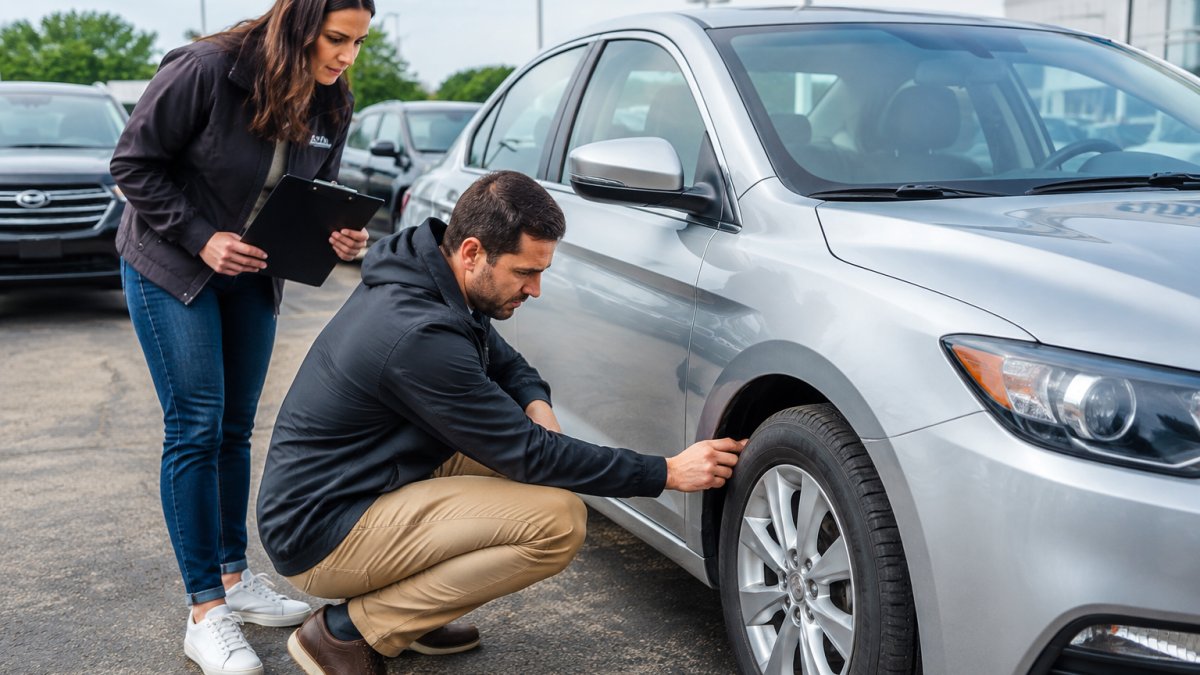
Before you sign anything, complete a pre-purchase inspection. Use this checklist:
- Review the vehicle history report and title status
- Confirm maintenance records and recent service
- Check tire tread depth and matching tire brands
- Test all lights, windows, locks and climate controls
- Inspect for fluid leaks under the car
- Take a test drive on highways and local roads
- Have an independent mechanic perform a pre-purchase inspection
Financing works best when you arrange it before you shop. Allen Automotive offers an online financing application, so you can review your options and understand your budget before visiting the lot.
Our recommendation is to compare the total loan cost, not just the monthly payment. A longer loan term lowers the monthly amount but increases the total interest you pay. Bring your trade-in details as well, since trade-in valuations can reduce the amount you finance.
When you are ready, start with our online financing application and review the used car inventory that fits your budget. Allen Automotive can help Grandview-area buyers find a used car within their budget with transparent information.
Frequently Asked Questions
What is the most reliable used vehicle under $15,000?
Compact sedans and mid-size sedans from manufacturers with long records of dependable powertrains tend to be the strongest choices in this price range. Reliability depends heavily on the specific model year, so check the year's known problems, recall history and maintenance records before you commit. A vehicle with complete service records and a clean vehicle history report usually beats a cheaper car with unknown ownership history.
What is the $3,000 rule for used cars?
The $3,000 rule is a common guideline suggesting you should avoid buying a used car if repairs are likely to cost about $3,000 or more within a short period, or if the car needs that much work to be safe. It is a rough benchmark, not a formal standard. Use it as a reason to get a pre-purchase inspection and compare the expected repair bills against the price you are paying.
How many miles is too many for a used car under $15,000?
There is no single cutoff, but many buyers look for a vehicle with well-documented maintenance rather than focusing only on odometer readings. Higher-mileage cars can still be solid choices if the timing belt, transmission fluid and major services were done on schedule. Ask for service records, and use the average mileage for used cars under 15k as a comparison point rather than a hard limit.
Can I finance a used car with a low budget?
Yes, many buyers finance used cars in this price range, but lenders look at your income, credit history and the total loan amount. Get pre-approved before you shop so you know your budget and can compare terms. Allen Automotive offers an online financing application, and current rates and terms depend on your application, so check directly for a quote.