 how-to
7 Steps to Negotiate a Used Car Price Like a Pro
Last Updated: November 4, 2026
Quick Summary
To negotiate used car price, research 5-8 comparable local listings, set a target price and a written maximum budget, then build your opening offer from the adjusted comparable average minus repair costs. Negotiate the out-the-door price in writing, keep trade-in and financing separate, and use inspection findings as leverage.
- Collect 5-8 comparable vehicles within about 50 miles, matching mileage within roughly 10,000 miles.
- Set your maximum budget before you leave home and write it down.
- Negotiate the out-the-door price, not the monthly payment, and get it in writing.
- Settle the vehicle price first, then the trade-in value, then financing.
- Walking away is your strongest move and it is free.
Table of Contents
- Research the Fair Market Value Before You Talk Numbers
- How Much Below Asking Price to Offer for a Used Car
- How to Negotiate Used Car Price Example: Scripts That Work
- How to Negotiate Used Car Price at Dealership
- How to Negotiate Used Car Price Over the Phone
- Use Vehicle History, Condition, and Inspections as Use
- Negotiating a Private-Party Sale and When the Seller Won't Budge
- Apply Online and Bring Your Best Offer to Allen Automotive
- Frequently Asked Questions
Research the Fair Market Value Before You Talk Numbers
Knowing how to negotiate used car price starts with one rule: the seller's asking price is an opinion, and market data is a fact. This guide from Allen Automotive walks you through the same process our team uses when we price and sell inventory, so you can walk in prepared instead of hopeful.
Start by checking what similar vehicles actually sell for. The FTC's consumer guidance on buying a used car recommends pricing research before any negotiation, and it's the step most buyers skip.
Pull Comparable Vehicles and Local Listings
Search listings for the same make, model, trim, and model year within about 50 miles. Match mileage within roughly 10,000 miles and note condition.
- Collect 5-8 comparable vehicles
- Record asking price, mileage, and any listed defects
- Ignore outliers on both ends
Set a Target Price and a Maximum Budget
Your target price is what you'd like to pay. Your maximum budget is the walk-away number, set before you leave home.
Build your max from the middle of your comparable range, then subtract for anything the car needs: tires, brakes, a timing belt. Write it down. A number in your head is a number you'll break.
How Much Below Asking Price to Offer for a Used Car
Many guides offer a rough rule of thumb for how far below asking price to open, but that range is a starting point, not a method. A better approach is to build your opening offer from four data points so you can defend the number when the seller asks where it came from.
The Four Inputs That Set Your Opening Offer
- Adjusted comparable average. Average your 5-8 comparable asking prices, then adjust each one for mileage and condition differences so you're comparing like with like. A car with 15,000 fewer miles than your target is worth more; subtract for the difference rather than ignoring it.
- Days on market. A vehicle that has been listed for a longer time may have more room to move than one listed recently. Ask the seller how long it's been listed, and check the original post date on the listing if it's still visible.
- Condition and inspection findings. Subtract the estimated cost of visible repairs, tires, brakes, battery, timing belt, fluid services, from your comparable average. Get a written estimate from a shop if the number is large.
- Local demand. A model that sells quickly in your area supports a firmer price; one that sits supports a lower offer. Compare how many similar vehicles are listed within about 50 miles, a crowded market favors the buyer.
Worked Example
Suppose the adjusted comparable average is $X and the vehicle needs repairs estimated by a shop.
That is a defensible number. When the salesperson asks why, you can point to the comparables, the repair estimate, and the days on market instead of guessing.
Watch out: a low opening offer with no supporting facts can read as a lowball and stall the conversation; always attach the reasoning to the number.
When the Percentage Rule Still Helps
Use a general percentage range as a sanity check, not the source of your offer. If your data-driven number lands far outside that range, recheck your comparables and repair estimates before you commit. A car priced well above the local market may justify a larger gap; a fairly priced one may justify a smaller one.
Build your opening offer from these four data points instead of a generic percentage rule.
| Input | What to check | How it shapes your offer |
|---|---|---|
| Adjusted comparable average | 5-8 comparable asking prices, adjusted for mileage and condition | Base figure for your offer |
| Days on market | How long the vehicle has been listed | Longer listings may have more room to move |
| Condition and inspection findings | Estimated cost of visible repairs | Subtract repair costs from the comparable average |
| Local demand | How many similar vehicles are listed within about 50 miles | Crowded market favors the buyer |
How to Negotiate Used Car Price Example: Scripts That Work
Here's a how to negotiate used car price example you can borrow word for word. Notice that every line is polite, direct, and backed by a fact.
"Thanks for showing me the car. I've looked at four similar ones nearby, and they're listed between a bit less and a bit more than yours.
If the salesperson pushes back, respond with a question, not a concession:
"I understand. What would it take to get closer to my number?"
Then stay quiet. Silence is a tool. Most buyers fill it by raising their own offer.
How to Negotiate Used Car Price at Dealership
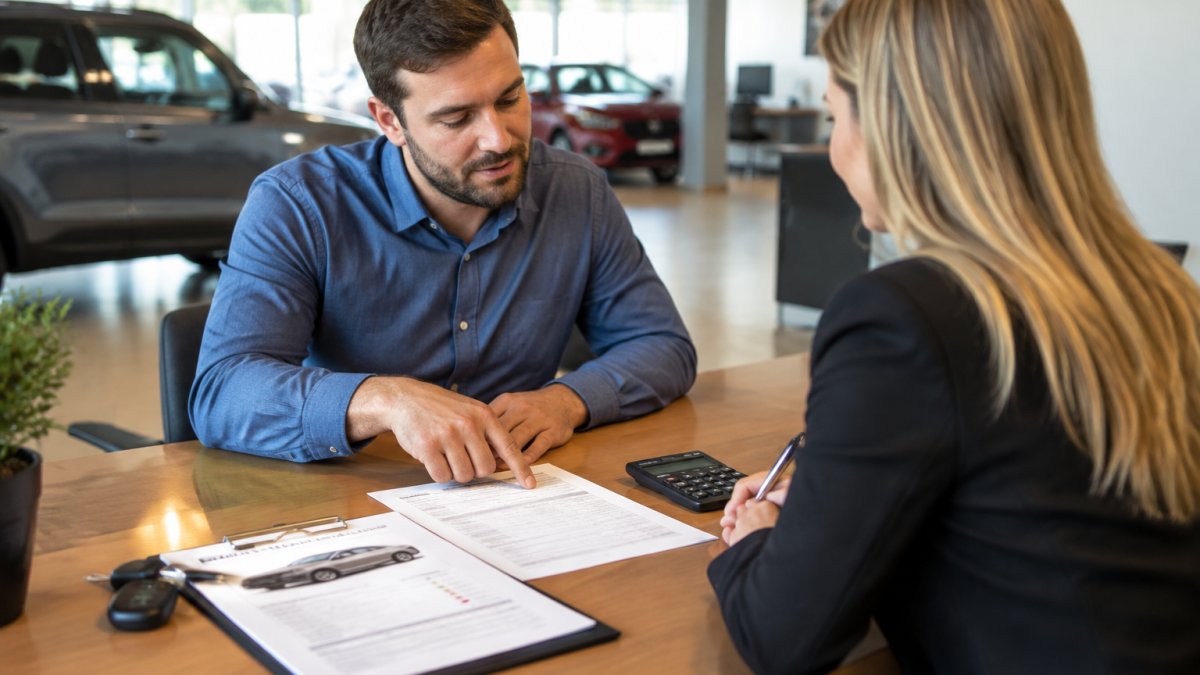
At a dealership, negotiate the total you'll pay, not the monthly payment. The monthly figure is where extra fees and long loan terms hide. Ask for the out-the-door price in writing before you discuss anything else.
Negotiate the Out-the-Door Price and Fees
Out-the-door price is the final amount including tax, title, registration, and dealer fees. Ask for it as one number, in writing, before you talk about anything else.
Here is a line-by-line example of what an out-the-door sheet can look like and how to treat each line:
- Vehicle price: the starting point; negotiate this against your comparable data first.
- Documentation fee: often negotiable, especially when you're paying cash or have outside financing. Ask what it covers and whether it can be reduced.
- Dealer add-ons: window tint, paint sealant, fabric protection, and nitrogen tires are usually optional. Decline them unless you specifically want them and the price is fair.
A common pattern is for a buyer to win a discount on the vehicle price and then give it back through an inflated documentation fee or an add-on package.
Watch out: a low vehicle price paired with a high documentation fee or mandatory add-on package is the most common way buyers lose ground; the out-the-door number is the only one that matters.
Scripts for the Fee Conversation
Use direct, polite wording that keeps the focus on the total:
"Before we go further, can you email me the out-the-door price with every fee itemized? I'd like to review the total, not just the vehicle price."
If an add-on appears on the sheet:
"I'm not interested in the paint protection. Please remove it and send me the revised out-the-door total."
If the documentation fee looks high:
"The documentation fee is higher than I expected. Is that a fixed charge, or is there room to adjust it if we move forward today?"
Keep Trade-In, Add-Ons, and Financing Separate
Treat each as its own negotiation. Settle the vehicle price first, then the trade-in value, then financing.
Mixing them lets a dealer hide a low trade-in offer inside a "great" vehicle price. If you plan to finance, arrive with a pre-approved loan from your bank or credit union so you can compare interest rates instead of accepting the first one offered.
A useful sequence is: agree on the out-the-door price of the vehicle you're buying, then present your trade-in and its valuation, then discuss financing as a separate transaction.
How to Negotiate Used Car Price Over the Phone
Phone negotiation works, and it saves you a wasted trip. Call, confirm the vehicle is still available, and ask for the out-the-door price before you visit. Email works even better because you get the number in writing.
Keep the call short:
- Confirm availability and mileage
- Ask for the out-the-door price
- State your offer and your timeline
Many dealerships now handle parts of the deal remotely. At Allen Automotive, you can apply for financing online, which can help you prepare before the numbers conversation starts.
Use Vehicle History, Condition, and Inspections as Use
A vehicle history report from NMVTIS shows title brands, reported accidents, and odometer readings. Pull one before you make an offer, and use what you find.
Then hire an independent mechanic for a pre-purchase inspection. It's the best money you'll spend in the whole process.
Use points that justify a lower offer:
- Accident history or a rebuilt title
- Worn tires, brakes, or battery
- Missing maintenance records
Present these as facts, not insults: "The inspection found the rear brakes are near the end of their life, so I've adjusted my offer to account for that."
Negotiating a Private-Party Sale and When the Seller Won't Budge
Private sellers often have more room to move than dealers, but less accountability. Confirm the seller's name matches the title, and never hand over cash without a signed title and a bill of sale.
If the seller won't budge, you have three options:
- Accept the price if it's still fair
- Walk away and keep shopping
- Ask for something else instead, like new tires or a fresh inspection
Walking away is not failure. It's the strongest move you have, and it's free.
Apply Online and Bring Your Best Offer to Allen Automotive
Negotiation gets easier when the dealer is upfront from the start. We offer online financing applications you can complete from home and trade-in valuations. Our on-site service center handles maintenance, so you don't have to look elsewhere for a shop.
Research helps buyers avoid overpaying.
Get started with Allen Automotive, apply online for financing, and bring your researched offer to a team that would rather earn your trust than win an argument.
Frequently Asked Questions
How much can you typically negotiate off a used car?
It depends on the vehicle's market value, condition, and how long it has sat on the lot. A common starting point is an offer below the asking price, backed by comparable listings in your area. Cars with higher mileage, accident history, or stale listings leave more room. Always anchor your offer to documented market value rather than a random discount, and negotiate the out-the-door price so fees don't erase your savings.
Can you negotiate a used car price at a dealership when paying cash?
Yes, but cash isn't the leverage many buyers assume. Dealers often earn part of their profit from financing, so a cash offer can sometimes reduce flexibility. Focus on the vehicle's market value and condition instead. Get pre-approved for a loan before you visit so you can compare financing options, and negotiate the price separately from how you pay. That keeps the conversation about the car, not the payment.
How do you negotiate a used car price with a private seller?
Research comparable listings, then make a polite, fact-based opening offer in person after inspecting the car. Point to specific issues like worn tires, needed maintenance, or higher mileage versus similar listings. Private sellers usually have more emotional attachment and less room to absorb a loss, so keep your tone respectful and be ready to walk away. Always arrange a pre-purchase inspection with an independent mechanic before agreeing on a final price.
What is the $3,000 rule for cars?
The $3,000 rule is a budget guideline suggesting you set aside roughly $3,000 for repairs and maintenance after buying an older used car. It isn't a negotiation tactic or a guaranteed figure, just a cushion for surprises like brakes, tires, or unexpected repairs. When negotiating, factor this reserve into your maximum budget so a lower purchase price doesn't leave you without funds for the first few months of ownership.
Ready to put these steps to work? Browse our used cars, trucks, and SUVs, get your trade-in valued, and apply online today.